
Slowing Kidney Disease Progression Through Proactive Population Health Management
Nephrologist Dr. Stephanie Toth-Manikowski explains how early identification and multidisciplinary care slow kidney disease progression, reduce unplanned dialysis starts, and expand home dialysis.
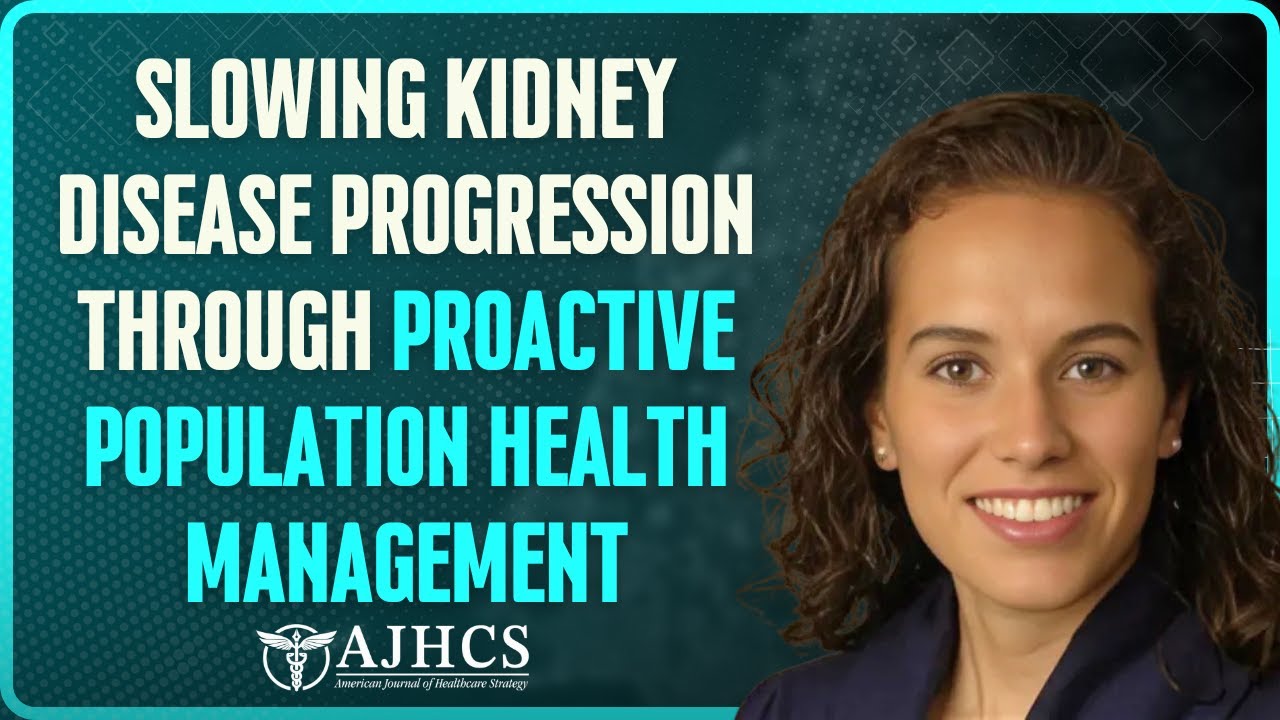
Chronic kidney disease (CKD) usually has no symptoms until most kidney function is gone. By then, the conversations are hard and the options are fewer. In this episode of The Strategy of Health from The American Journal of Healthcare Strategy, host Cole Lyons talks with nephrologist Stephanie Toth-Manikowski, MD, MHS, Healthmap Solutions’ National Senior Medical Director at the time of recording, about how proactive population health management slows kidney disease progression and helps patients prepare for kidney failure if it comes.
Why nephrology
Dr. Toth-Manikowski studied at Harvard, earned her medical degree at the University of Illinois Chicago, trained in internal medicine at Boston Medical Center, and completed her nephrology fellowship and a Master of Health Science in clinical epidemiology at Johns Hopkins. She chose nephrology for the long-term relationships: caring for patients from stage 3 through dialysis and, for the lucky ones, transplant.
“For me, that was the biggest highlight of the month, whenever one of my patients was transplanted.” (Dr. Stephanie Toth-Manikowski)
The problem: patients arrive too late
Too often, Dr. Toth-Manikowski met patients for the first time when they had around 18 percent kidney function left, or in the emergency department being told they needed dialysis right away. Denial, missed appointments, and clinics without the capacity to follow up all contribute. As she put it, a physician can only help the person sitting in front of them.
Healthmap addresses that gap in two ways. It works with members starting at stage 3, and it identifies people with advanced CKD who haven’t seen a nephrologist in six, nine, or twelve-plus months. (See The Silent Epidemic: Why Kidney Disease Often Goes Undiagnosed.)
A multidisciplinary team for real-world barriers
Healthmap nurses assess members for social and behavioral barriers to care, then bring in the right specialist:
- Social workers find transportation benefits and community resources, and have even helped members find housing.
- Pharmacists help members afford their medications. People with CKD take an average of about 12 different medications.
- Registered dietitians help members manage sodium, potassium, and phosphorus alongside diabetes and family meal planning. Some members have lost enough weight to come off blood pressure medications or qualify for the transplant list.
(For more on diet, see Sodium, Potassium, and Phosphorus: Why They Matter in Kidney Disease.)
Why slowing progression matters
Everyone loses some kidney function with age. The goal is to slow that decline. Better kidney function means lower risk of heart attack and stroke, events that can permanently change a person’s quality of life. Lifestyle changes help, and so do medications. Dr. Toth-Manikowski pointed to ACE inhibitors and ARBs, inexpensive blood pressure drugs that also slow CKD progression and protect the heart. Healthmap works to make sure every member who should be on them is. Nurses also educate members about medications that can harm the kidneys, like over-the-counter NSAIDs such as ibuprofen and naproxen. (See our patient guide, NSAIDs: Medicines to Avoid with Kidney Disease.)
Avoiding the “crash” into dialysis
An unplanned dialysis start happens in the hospital, often with little understanding of what is happening, followed by a sudden three-times-a-week schedule. It is associated with depression, complications, and high 90-day mortality. Healthmap works to prevent it.
Part of that is education about options. Dr. Toth-Manikowski noted that the vast majority of nephrologists would choose home dialysis for themselves or their families, yet most U.S. dialysis patients are treated in a center, and many were never told home dialysis was an option. Healthmap nurses present the pros and cons of each modality without steering, and let members decide with their caregivers. (Learn more in Moving Into the Home: Healthmap’s Success in Increasing Home Dialysis Use.)
What it looks like for physicians
From the clinic side, she sees patients who are better educated about their options. Healthmap shares what it discussed with the nephrologist, then helps coordinate next steps, such as vascular access appointments, surgeon visits, and post-procedure care. She said she has never worked in a health system that could provide the level of care coordination Healthmap does.
The next five years
Dr. Toth-Manikowski is optimistic. New therapies beyond ACE inhibitors and ARBs can slow CKD progression when started early. But too many people still fall through the cracks, so the work of finding them early continues.
Listen to the full episode
Find the episode page on AJHCS, watch on YouTube, or listen on Apple Podcasts or Spotify. Learn more about our Population Health Management approach.
Better support for every step of complex care
Healthmap brings population health management, kidney and cardiac care, technology and analytics, and care navigation together to help health plans and providers support the people they serve with greater clarity and coordination.