
Making Predictive AI Actionable: Why Human Behavior and Physician Partnerships Are Key
Healthmap Co-founder and President Joe Vattamattam explains how predictive AI, physician partnerships, and behavior change work together to improve outcomes for people with chronic kidney disease.
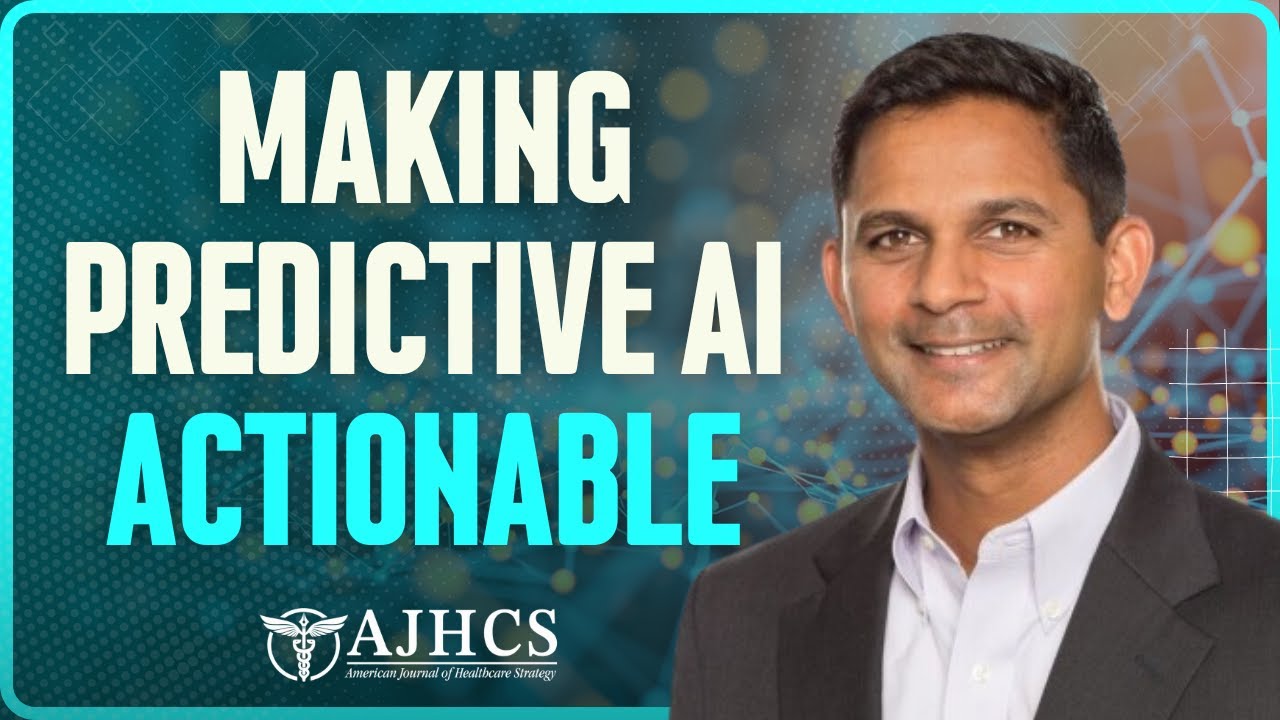
Predictive analytics can flag which patients are headed for trouble. But a risk score on its own doesn’t change anything. In this episode of The Strategy of Health from The American Journal of Healthcare Strategy, Healthmap Solutions Co-founder and President Joe Vattamattam talks with host Cole Lyons about how Healthmap turns AI predictions into action, and why human behavior and physician partnerships are what make the difference.
“They don’t really make any difference unless you can change some human behavior. At the end of the day, we need a patient to change their behavior, potentially a provider to change their behavior.” (Joe Vattamattam)
A mission tied to the money
Joe co-founded Healthmap in 2013 after roles leading medical economics at CareCentrix, working on the payer side at WellCare, and investment banking. He credits much of the company’s culture to how its economics are structured: Healthmap only earns revenue by reducing the cost of care, and it reduces the cost of care by preventing unnecessary admissions and emergency department visits. The mission and the business model point in the same direction.
What the data showed early on
Joe’s quantitative background shaped Healthmap’s strategy from the start. Three findings stood out:
- Half the opportunity is upstream. Members with end-stage renal disease (ESRD) cost the most per person, but across the full chronic kidney disease (CKD) population they represent about 15 to 20 percent of costs. Stage 3 members represent about half. As Joe put it, “The best way to reduce your dialysis costs is to never need dialysis.” (See How Early CKD Identification Improves Outcomes.)
- Most CKD patients aren’t seeing a nephrologist. Sixty to 70 percent of CKD members hadn’t seen one in the past 12 months, including many in stages 4 and 5. Reaching members meant working with primary care physicians, cardiologists, and endocrinologists, not just nephrologists.
- A minority drives most future cost. About 30 percent of the population consistently accounts for about 80 percent of future costs. That finding led to Healthmap’s predictive model.
Clinical from day one
Healthmap has never been an analytics-only company. Members typically see three to four physicians a year and take 15 to 20 medications prescribed by different people. Changing their care means working with those physicians. Joe said clinical expertise informs all of Healthmap’s analytics, and everything the team recommends is grounded in evidence-based guidelines, distilled down to the one thing that matters most for each patient at that moment. Healthmap calls that “next best action.”
Predicting 6 to 12 months ahead
Cole pointed out that many predictive tools only flag risk once a patient reaches the hospital. Healthmap looks 6 to 12 months out. Joe credited two things. First, experience: Healthmap has analyzed more than $30 billion in health care spending for people with kidney disease, one of the richest kidney data sets in the country. Second, transparency. Every member receives an individual, proprietary risk score, and a separate model generates a “driver report” that explains why the person is high risk, such as a recent utilization pattern or running low on a medication.
That context goes to Healthmap’s frontline clinicians and navigators, built into their workflow, so they can have a specific, useful conversation with the patient or physician. Joe said the connection between the AI/ML work and the technology platform is “where the magic really happens.”
Carium: acting at the edge of care delivery
Healthmap’s acquisition of Carium gives the team a way to reach patients and providers intuitively and to bring in new signals, including remote patient monitoring data from scales, blood pressure cuffs, and glucometers. Those signals feed back into the analytics and reach patients, providers, and Healthmap clinicians at the right time. Joe said it’s early for results, but the promise is significant.
What’s next
People with kidney disease almost always have other conditions, so Healthmap already manages far more than kidney health: cardiac issues, COPD, behavioral health, and social determinants. Joe sees the same approach extending to other chronic conditions with predictable “spike” events, like heart failure with reduced ejection fraction, where Healthmap already has predictive models. (Learn about our cardiac health management program.)
Listen to the full episode
Find the episode page on AJHCS, watch on YouTube, or listen on Apple Podcasts or Spotify. Learn more about how Healthmap combines data and clinical care in our Population Health Management program.
Better support for every step of complex care
Healthmap brings population health management, kidney and cardiac care, technology and analytics, and care navigation together to help health plans and providers support the people they serve with greater clarity and coordination.