
Healthmap Leaders on Growth, AI, and the Future of Healthcare
CEO Eric Reimer and Chief Growth Officer Tom Gaffney look back on Healthmap’s strongest growth year, the Carium integration, and the industry trends shaping kidney care in 2026.
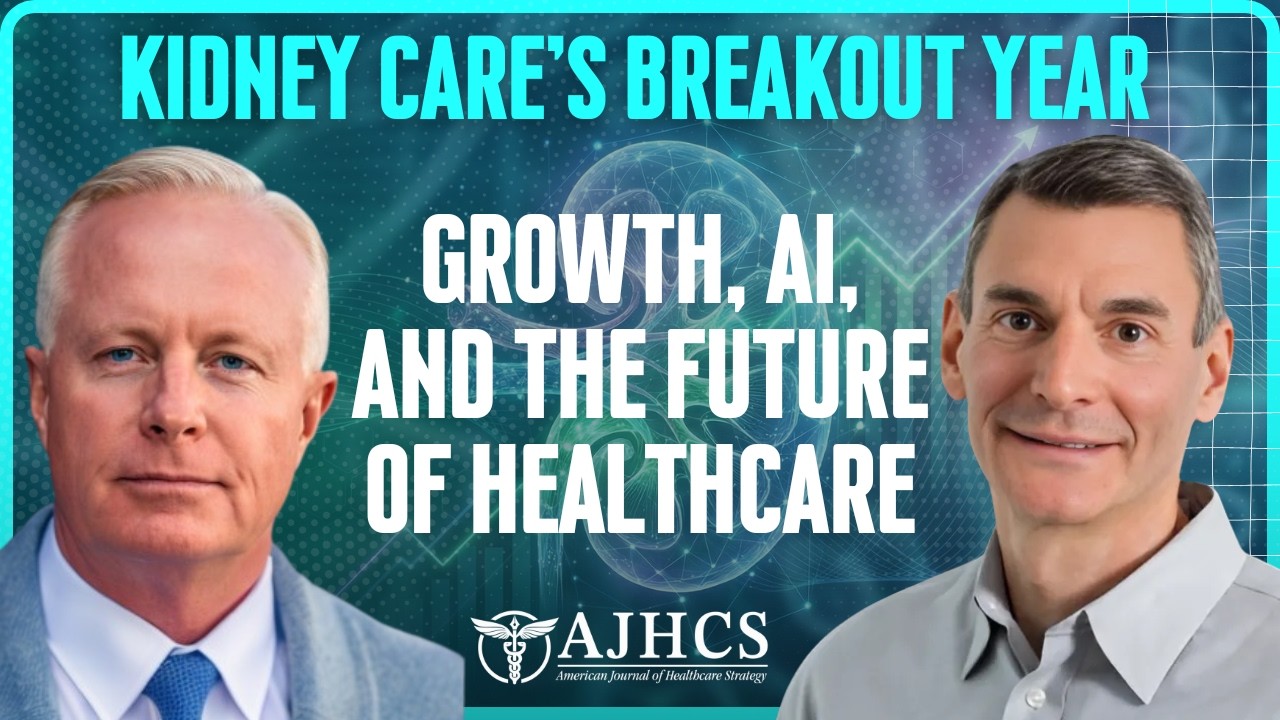
2025 was a tough year for health plans. Utilization rose, margins tightened, and vendors came under more scrutiny than ever. It was also Healthmap Solutions’ strongest growth year to date. In this year-in-review episode of The Strategy of Health from The American Journal of Healthcare Strategy, Chairman and CEO Eric Reimer and Chief Growth Officer Tom Gaffney sit down with host Cole Lyons to explain what drove that growth, what the Carium acquisition is adding, and what to expect in 2026.
Growth built on stage 3
Tom called 2025 the most successful growth year since he joined the company in 2019. A big reason is Healthmap’s focus on members with stage 3 chronic kidney disease (CKD), earlier than many programs engage. As with any chronic condition, early identification and early management lead to better outcomes.
That work depends on close collaboration with four provider groups: primary care physicians, nephrologists, endocrinologists, and cardiologists. Primary care is especially important at stage 3, because PCPs are juggling flu shots, diabetes, and hypertension and often aren’t focused on early CKD. Healthmap also tailors its interventions to each member. As Tom put it, a stage 3 patient isn’t just a stage 3 patient. Each one has their own comorbidities and social needs. (Read more on this in Navigating Comorbidities: A Balancing Act.)
Performance, performance, performance
Asked what drove growth despite industry headwinds, Tom was direct: results. Healthmap measures success by savings delivered, clinical outcomes, and operational and service excellence. In 2025, the company:
- Signed four new clients representing about $1.5 billion in total spend.
- Renewed contracts with four existing clients that had worked with Healthmap for three years.
- Expanded with current clients into new markets and lines of business.
Eric added that Healthmap extended its savings and clinical results at a time when plans were fighting underlying trend, which cemented those relationships. Savings are followed by gain share reconciliation, where both sides agree on the data and the plan pays out. Doing that successfully through a hard financial year is its own proof point.
“They don’t have time and money to waste on solutions that fail.” (Eric Reimer)
What Carium adds
Healthmap acquired Carium in early 2025 (read the announcement). Eric explained the goal simply: meet members where they are. Some people answer the phone. Some only answer texts. The digital platform doesn’t replace calls, visits, or video. It reinforces them with frequent reminders and encouragement between conversations, so a message about medication adherence doesn’t go stale.
Priorities for 2026 include getting the app into more members’ hands, expanding daily use (weight, blood pressure readings, medication confirmation), and sharing more of that information with physicians. Carium was originally built for physicians and health systems, so it was designed around what clinicians want to know when the patient isn’t in front of them. The Carium team is fully integrated, and Eric expects nearly every member and provider interaction to run on a platform powered by that technology.
Three industry trends that shaped the year
Eric pointed to three forces:
- Higher utilization and vendor scrutiny. Delivering savings in hard times positioned Healthmap as a partner in plans’ turnarounds and opened conversations about expanding to stage 3, which roughly doubles the savings opportunity.
- AI. Healthmap uses AI for efficiency (information synthesis and back-end documentation, so clinicians can spend time being clinical) and for effectiveness (next best action, including the best channel and timing for outreach). Plans vary in their comfort with AI, and Healthmap adapts to each customer’s pace.
- Real chronic care management. Plans are asking harder questions about how risk-bearing partners actually manage the sickest members. That favors models that get members to nurses, medications, and labs, and keep them out of the hospital.
How they knew the model would work
Eric said the company started with a thesis, built with input from PCPs, nephrologists, and members, then piloted and learned with early clients rather than taking on outsized risk. The team still says it doesn’t have everything figured out, and that mindset is part of why results have been consistent across years and clients. See our results and outcomes for more.
People first, even in the age of AI
Today about 85 percent of Healthmap’s business is Medicaid and Medicare. Tom emphasized that the company doesn’t chase every customer. It looks for plans that value predictable savings, consistent results, and strong provider and member satisfaction. And he credited the team’s execution as the real differentiator. Eric agreed: technology makes Healthmap’s people better, but it doesn’t replace them. Most members already know what they should do. A person connecting with them is what changes behavior.
What’s next in 2026
Eric expects Healthmap to add more spend under management in 2026 than ever before, with multiple new accounts already in implementation. He also expects the company’s best savings rate yet, driven by Carium, AI built into the platform, and its people. Healthmap is also focusing more on results for the comorbidities that come with kidney disease, and may extend that work to people headed toward kidney disease.
Listen to the full episode
Find the episode page on AJHCS, watch on YouTube, or listen on Apple Podcasts or Spotify. Health plans can learn more on our Health Plans page.
Better support for every step of complex care
Healthmap brings population health management, kidney and cardiac care, technology and analytics, and care navigation together to help health plans and providers support the people they serve with greater clarity and coordination.