
Amanda’s Story
Amanda was living with end-stage renal disease, heart failure, high blood pressure, and depression while experiencing homelessness. Here is how a Healthmap Care Navigator helped her reconnect with care.
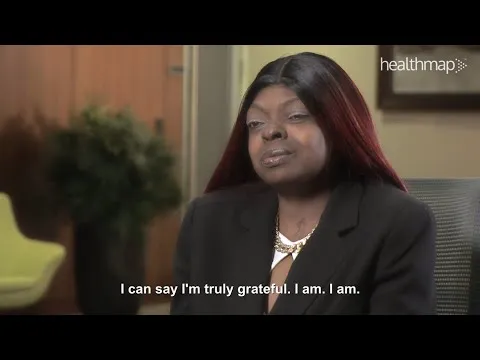
Before being enrolled in Healthmap Solutions’ Kidney Population Health Management program, Amanda was living with end-stage renal disease (ESRD), complicated by high blood pressure, congestive heart failure, and depression, all while experiencing homelessness. She was unable to find a nephrologist, cardiologist, or even a primary care doctor, and she was barely coping. Let Amanda tell you in her own words the difference the Healthmap team has made in her ESRD treatment and overall quality of life.
Navigating Kidney Failure Without a Home
Managing ESRD takes a team. Dialysis schedules, medications, specialist visits, and lab work all have to line up, and that coordination assumes a stable address, reliable transportation, and a phone that works. For Amanda, none of that was a given. Every appointment she tried to set up on her own ran into another wall.
“Being homeless, it’s hard to find places when you’re trying to go out on your own to do it. It’s a lot different when you’re doing it on your own than having someone to help you.”
Her story is not unusual. Housing instability, food insecurity, and lack of transportation are among the social determinants of health that make chronic kidney disease harder to manage and outcomes harder to improve. Identifying those barriers early is a core part of our approach to kidney disease management.
When the System Stops Feeling Like It Works
Repeated dead ends take a toll. With heart failure, high blood pressure, and depression layered on top of kidney failure, Amanda was not just short on providers. She was starting to give up on the idea that anyone could help. Her Healthmap Care Navigator recognized that right away.
“Because of some of those barriers that she was experiencing, she kind of lost faith in the system. So as a care navigator hearing that, I didn’t want her to lose faith. I wanted her to keep moving forward and just let her know that somebody cares and is willing to do anything I can to advocate for her, so that we can improve her quality of life. And not just her life, but her family’s life.”
That is the role Care Navigators play in our program. They work one-on-one with members to rebuild trust, remove obstacles, and keep care moving forward. You can read more about how Care Navigators help members overcome social barriers to care.
Reconnecting Amanda With Care
With a Care Navigator in her corner, Amanda no longer had to find her way through the healthcare system alone. The Healthmap team worked to connect her with the nephrology, cardiology, and primary care support she had been unable to find on her own, and to coordinate that care around her kidney disease and her other chronic conditions.
Just as important, the team addressed her whole situation, not just her lab values. Depression is common among people living with kidney failure, and it can make every other part of treatment harder. Our program is built to address behavioral health alongside physical health for members with CKD and ESRD.
Why Stories Like Amanda’s Matter
Kidney care outcomes depend on more than clinical guidelines. They depend on whether patients can actually reach the care those guidelines describe. For members facing homelessness and other social barriers, a dedicated advocate can be the difference between falling through the cracks and getting the right care at the right time.
Amanda’s story reflects the commitment behind Healthmap’s Kidney Population Health Management program: meet members where they are, remove the barriers standing between them and care, and support their families along the way. Learn more about our work to advance health equity in kidney care, or hear directly from the team in Value-based Kidney Care: The Care Navigator’s Perspective.
Better support for every step of complex care
Healthmap brings population health management, kidney and cardiac care, technology and analytics, and care navigation together to help health plans and providers support the people they serve with greater clarity and coordination.